The Jeep Commander XK (2006–2010) is one of the most capable and underappreciated Jeeps ever built. Seven-passenger seating, authentic Trail Rated off-road credentials, and a WK platform shared with the Grand Cherokee — in a package that the mainstream market never quite appreciated while it was on sale. Now, in 2026, those who kept theirs running know exactly what they have. Aftermarket seat cover support remains strong, the ownership community is active, and a well-sourced cover kit will protect your Commander's interior for another decade. This guide cuts through the noise to give you exactly what fits, what material to pick, and who makes the best product for every row in your XK.
🏆 Top 5 Jeep Commander Seat Covers — Ranked for 2026
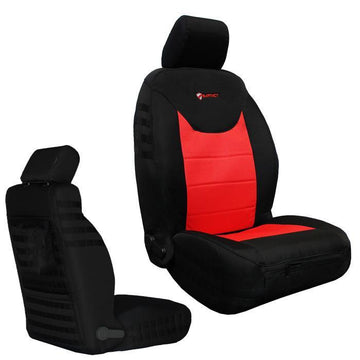
Bartact is the definitive #1 pick for any serious Jeep owner, and the Commander's front bucket seats are fully compatible with Bartact's JK-era tactical covers. The bucket geometry of the XK Commander front seats aligns closely enough with JK Wrangler seats that Bartact's hook-and-loop and strap mounting system locks in cleanly — providing the kind of fit that cloth-seated Commander owners especially appreciate. The 1000D Cordura option is ballistic-grade: the same woven nylon used in military pack gear, capable of outlasting the vehicle it's installed on under daily use. The 600D Patriot Polyester tier gives you a lighter, more flexible option that still dramatically outperforms any generic Amazon cover on durability.
The MOLLE side panels are the feature that separates Bartact from everything else. On a Commander used as a family expedition vehicle or overlanding rig, MOLLE compatibility means tool pouches, first-aid organizers, and hydration holders mount directly to the seat back — turning the front cabin into a functional mobile workspace. Heated-seat compatible, machine washable, and available in an array of color combinations. For the front row of any Commander, this is the only brand worth considering if longevity matters more than minimizing initial spend.
View Bartact Tactical Covers →
Autocauxy makes the best full-set Commander-specific custom-fit option available in the mid-range price tier. The key word here is "custom-fit" — Autocauxy patterns are cut for the 2006–2010 XK Commander's exact seat geometry, unlike universal covers that require extensive stretching and tucking to lie flat. The waterproof leatherette surface wipes clean with a damp cloth in seconds, making it ideal for Commander owners who haul children, dogs, camping gear, or trail mud on a regular basis. For owners who want proper Commander fitment across multiple rows without Bartact's price investment on every seat in the vehicle, Autocauxy fills that gap well. Bench-configuration second-row covers are the more commonly stocked option — confirm your row 2 layout before ordering.
Check Price on Amazon →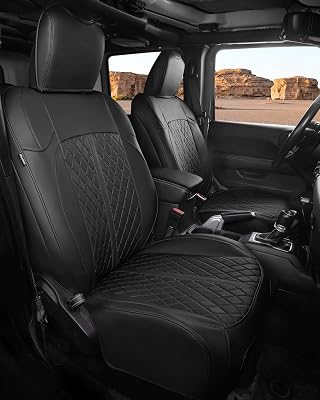
Covercraft's SeatSaver line is the gold standard for factory-specification fitment on discontinued vehicles. Their Commander-specific patterns are available for both the second-row bench and captain's chair configurations — a critical detail that most brands overlook entirely. The polycotton canvas is fully breathable in a way that leatherette and neoprene simply cannot match: on a three-row family SUV where passengers sit close together across hot summers or long road trips, breathability genuinely affects comfort. For Commander owners with factory heated front seats (Limited and Overland trims), Covercraft is the safest non-Bartact choice — the polycotton canvas allows heat to transfer normally, while foam-backed leatherette blocks it. Machine washable; dries fully without stiffening.
Check Price on Amazon →
FH Group is the entry-level choice for Commander owners who need protection without premium spend. If your Commander has 180,000 miles, gets used as a job site vehicle, or is otherwise a hard-working daily driver rather than a weekend trail rig, FH Group gets the job done at a price that makes sense. The Commander-compatible listing covers front and rear rows; fitment quality is universal rather than custom-cut, which means some bolster bunching and periodic retucking after passengers load in and out. For a high-mileage work Commander that you want protected but not prettified, this is the practical call.
Check Price on Amazon →
CalTrend is the choice for Commander owners who want to give a tired interior a genuine luxury refresh — without the cost of a full re-trim. The premium Nappa-style leatherette holds its shape and structure far better than budget leatherette options, looks noticeably more upscale, and fits the Commander's seat geometry with Commander-specific patterns. If your Commander is a family road-trip vehicle, a weekend explorer, or simply a vehicle you take pride in maintaining aesthetically, CalTrend delivers that OEM-plus appearance. Not recommended for trail-heavy use or heated-seat Commanders — the non-breathable surface can reduce heating element efficiency and shows scuffs more readily than Cordura or canvas under regular off-road abuse.
Check Price on Amazon →📊 Jeep Commander Seat Cover Comparison Table — 2026
| Brand | Fitment | Material | Heated Seat | MOLLE | Rows Covered | Best For |
|---|---|---|---|---|---|---|
| Bartact | Jeep JK/Commander-compat. | 1000D Cordura / 600D Poly | ✅ Yes | ✅ Yes | Row 1 front | Trail use, longevity |
| Autocauxy | Commander 2006–2010 | Waterproof Leatherette | ⚠️ Verify | ❌ No | Rows 1–2 | Custom fit, mid-budget |
| Covercraft | Commander 2006–2010 | Polycotton Canvas | ✅ Yes | ❌ No | Rows 1–2 | Heated seats, OEM look |
| FH Group | Universal (Commander-compat.) | Budget Leatherette | ⚠️ Not rated | ❌ No | Rows 1–2 | Budget, utility use |
| CalTrend | Commander 2006–2010 | Premium Leatherette | ⚠️ Verify | ❌ No | Rows 1–2 | Interior refresh, luxury look |
📐 Jeep Commander XK Fitment Guide — All Model Years & Trims 2006–2010
The Jeep Commander ran from 2006 through 2010 with the same WK-platform body architecture across all five model years. Seat cover fitment is therefore consistent from the first 2006 Sport to the last 2010 Overland — the front bucket geometry did not change year to year. What does change between trim levels is the second-row seat configuration, the presence of heated and ventilated seats, and interior upholstery material (cloth vs. leather). Here is the full trim-by-trim breakdown:
2006–2010 Sport
Base trim. Front buckets identical to all other trims. Second row: fold-flat 60/40 bench (7-passenger layout most common). Third row: fold-flat bench. Cloth interior standard. No factory heated seats. Bartact + any bench-configured second-row cover is the ideal pairing here.
2006–2010 Limited
Mid trim. Standard leather-appointed interior. Second row: often captain's chairs (5-passenger) but some model years also offered bench. Factory heated front seats standard. Confirm second-row config before ordering — captain's chair SKU needed for row 2 if equipped. Covercraft canvas best pick for heated-seat safety.
2007–2010 Overland
Top trim. Premium leather heated AND ventilated front seats. Captain's chairs in second row standard. Third row fold-flat bench. Ventilated seats require breathable cover — avoid all foam-backed leatherette here. Covercraft SeatSaver canvas or Bartact Cordura only for front row on this trim.
2008–2010 Trail Rated
Off-road capability package, available across trim lines. Cloth interior most common. Same seat architecture as Sport. Best pairing for Bartact Cordura — cloth seat fabric anchors hook-and-loop mounting exceptionally well. MOLLE side panels add genuine utility for trail and recovery gear.
🪑 Three-Row Coverage Deep Dive — What Every Commander Owner Must Know
The three-row seating layout is the defining characteristic that set the XK Commander apart from every other Jeep in the lineup during its production run. Understanding what each row actually consists of — structurally and dimensionally — is the key to buying covers that fit correctly and function without compromising the seats' fold-flat mechanisms.
Row 1 — Front Bucket Seats
Identical across all Commander trims 2006–2010. Best candidate for Bartact Cordura tactical covers — MOLLE integration, maximum durability, heated-seat compatible. The #1 investment row in any Commander.
Row 2 — Bench or Captain's Chairs
Trim-dependent: Sport typically bench, Limited/Overland typically captain's chairs. Patterns are NOT interchangeable. Autocauxy and Covercraft both list separate SKUs. Verify your configuration before ordering — always.
Row 3 — Fold-Flat Bench
Folds flat into the cargo floor. Covers must not interfere with the fold mechanism. Use thin, well-fitted covers. Thick foam-backed covers create hinge pressure and floor surface unevenness when the row is folded down.
Row 1: Front Buckets — The Priority Investment
All Commander trims from 2006 through 2010 use the same front bucket seat shape. This is the highest-wear row in any SUV — the driver's seat in particular takes more daily abuse than any other seat in the vehicle. It is also the row where seat cover quality is most visible and most tactile to the driver and front passenger. This is where Bartact's argument becomes undeniable: the 1000D Cordura covers will outlast multiple sets of budget leatherette alternatives, and the MOLLE side panels add functional storage that transforms the front cabin on trail or travel days. The JK Wrangler-era Bartact front bucket covers mount cleanly on Commander front seats due to compatible bucket geometry — the XK community has documented this fit consistently. Heated seat compatible. Machine washable. Made in USA.
Row 2: The Bench vs. Captain's Chair Problem
This is where most Commander seat cover purchases go wrong. The 2006–2010 Commander offered two distinct second-row configurations: a 60/40 fold-flat bench seat (the 7-passenger layout, common on Sport trims) and second-row captain's chairs (the 5-passenger layout, standard on most Limited and Overland configurations). These are fundamentally different seat shapes requiring completely different cover patterns. A bench cover over captain's chairs will not anchor, will bunch in the center, and will eventually slide off. A captain's chair set on a bench will not cover the continuous seat bottom correctly. Before ordering any second-row cover, confirm your configuration. The fastest method: sit in the back row and look forward — if there's a continuous cushion across, it's a bench. If there's a gap between two distinct seat units with a center console, it's captain's chairs.
Row 3: Fold-Flat Bench — Function Over Aesthetics
The third-row bench is the most mechanically sensitive row for seat cover purposes. It folds flat into the cargo floor to create an extended, flat load area — a function that many Commander owners use multiple times per week for camping trips, gear hauls, or sports equipment transport. Covers installed on the third row must accommodate this fold-flat operation without resistance. Thin, form-fitting covers work best here; covers with thick foam backing create pressure points and hinge resistance that, over time, wear on the fold mechanism and leave impressions in the cargo floor surface when the row is down. Autocauxy's fitted Commander patterns handle the third-row fold-flat well when properly installed. If you use the third row infrequently and mainly want surface protection when it's upright, a basic universal bench cover works adequately at lower cost.
🧵 Materials Guide — What Works on a Jeep Commander XK
Material choice on a Commander requires factoring in the vehicle's age (15–20 years old in 2026), original upholstery type (cloth vs. leather depending on trim), climate conditions, and how the vehicle is used. The wrong material can create heat buildup in summer, trap moisture against factory leather (accelerating cracking), or block factory seat heating elements. Here is the definitive breakdown:
1000D Cordura Nylon — Bartact Premium
Maximum durability. Ballistic-grade military nylon. UV-resistant, abrasion-resistant, moisture-repelling without trapping. Machine washable. Heated-seat compatible. The 15–20-year investment pick for Row 1. Made in USA by Bartact.
600D Patriot Polyester — Bartact Value
Lighter and more flexible than 1000D Cordura, with still dramatically better durability than any generic cover. Heated-seat compatible. Machine washable. Right pick for light-trail and daily-commute Commanders on a tighter budget within Bartact's lineup.
Polycotton Canvas — Covercraft SeatSaver
Breathable, OEM-level Commander-specific fit, confirmed heated-seat and ventilated-seat safe. Best choice for Overland/Limited with heated and ventilated front seats. Absorbs moisture rather than repelling — requires more cleanup after wet ingress, but machine washable and dries cleanly without stiffening.
Waterproof Leatherette — Autocauxy / CalTrend
Easiest to wipe clean. Protects and preserves factory leather from cracking on 15–20-year-old Commanders. Blocks heated seat function if foam-backed — verify heat compatibility before purchase. Warm in summer. Best for family/commuter Commanders in moderate climates without factory seat heating.
What NOT to Use
Avoid neoprene on heated/ventilated Commander seats — thermally insulating, causes element overheating. Avoid thick foam-backed covers on Row 3 — interferes with fold-flat mechanism. Never use covers labeled "Wrangler TJ/JK/JL only" without explicit Commander 2006–2010 fitment confirmation in the listing.
🔩 Installation Guide — Getting Commander Seat Covers Right First Time
Commander seat cover installation follows standard SUV fundamentals, with three Commander-specific considerations that most generic guides miss entirely:
- Remove headrests before starting any row. Slide the cover over the top of the seat back, thread the headrest posts back through their holes in the cover, then reinsert and lock the headrests into position. Attempting to work around locked headrests creates crown bunching at the top of the seat back that you cannot fully eliminate afterward.
- Front buckets: tuck the seat gap before cinching straps. Commander front bucket seats have a gap between seat back and seat base that needs the cover material firmly and cleanly tucked in. Use a thin plastic card or a cover-tuck tool to push material into the gap before tightening the underside attachment straps. Skipping this step results in cover migration forward under driver weight within days of installation.
- Second-row bench: fold-test before final cinch. After positioning covers on the second-row bench, fold the bench section (60/40 or full) to confirm the fold function works without resistance while the cover is in place. If binding is noticeable, re-tuck the rear edge before cinching the straps fully. A cover that prevents the bench from folding defeats one of the Commander's core cargo functions.
- Third row: test fold-flat with cover fully installed. After installing Row 3 covers, fold the seat flat and verify the mechanism operates freely — both the main fold-flat action and the seatback fold onto the seat cushion. Any resistance means the cover base or seatback portion needs to be repositioned or re-tucked before repeated use wears on the hinge mechanism.
- Heated seats: verify heat transfer within 5 minutes. After installing covers on any row with factory heat, run the seat heating function and confirm warmth reaches the surface through the cover material within 3–5 minutes. No warmth felt through the cover after 5 minutes indicates the material is blocking heat transfer — replace with a breathable alternative (Cordura or polycotton canvas) before cold weather arrives.
🛡️ Airbag Safety — XK Commander vs. JK and JL Wranglers
The Jeep Commander XK (2006–2010) uses side-curtain airbags mounted in the roofline headliner — not in the seat backs themselves. This is a fundamentally different architecture from newer Jeep vehicles that integrate side airbags directly into the seat back cushion. The JK Wrangler (post-2012 models) and the JL Wrangler both use seat-integrated side airbags that deploy through a specifically stitched "air bag compatible" seam in the seat cover. Commander owners do not have this consideration — because Commander airbags deploy from the roof rail, standard seat covers that wrap around the seat back do not physically obstruct the airbag deployment path.
This gives Commander owners significantly more flexibility in seat cover selection than owners of newer Jeeps with seat-integrated side airbags. You do not need to specifically look for covers with "SAB compliant" stitching on the seat back outer panel for the Commander's airbag system to function correctly. That said, best practice always applies: verify that any cover listing either explicitly states airbag non-interference or, at minimum, makes no claim of modifying the seat back structure. Bartact products include explicit SRS compliance statements on all Jeep-compatible listings. For Commander owners, the airbag situation is less complex than for JK/JL Wrangler owners — but confirming rather than assuming is always the right approach before purchase.
💡 Why the Jeep Commander Community Is Still Strong in 2026
The Commander was discontinued after 2010, and the conventional wisdom at the time was that Jeep would eventually replace it with something comparable. That direct replacement never arrived in the US market. The Grand Cherokee grew a third-row option with the Grand Cherokee L, and the Wagoneer nameplate was revived — but neither matches the XK Commander's combination of price-to-capability ratio that attracted its original buyers. This gap is why the Commander community has not just survived discontinuation but grown more committed over time.
Mechanically, the Commander benefits from extensively documented service knowledge. The 3.7L V6, 4.7L V8, and 5.7L HEMI V8 are all long-lived powerplants with robust parts availability and deep aftermarket support. The Quadra-Drive II four-wheel drive system, Electronic Sway Bar Disconnect, and full-size spare tire mount give the XK genuine off-road capability that remains competitive even against newer platforms at significantly higher prices. Commanders with 200,000+ miles on the odometer are actively maintained and discussed in XK forums and Facebook groups — owners are investing in protection and upgrades rather than replacing vehicles that simply keep working.
Seat covers are among the highest-leverage maintenance investments available for any high-mileage Commander. Original cloth seats accumulate odors and staining over 15–20 years of regular family use. Original leather — especially on Limited and Overland Commanders that were equipped with it — cracks and dries out without consistent conditioning, and cracked factory leather accelerates visibly once the surface breaks down. A well-fitted seat cover prevents that damage at a fraction of the cost of any professional re-trim. A Commander with protected, clean interior seating looks and feels far better maintained than one with cracked leather or stained cloth — and that perception translates directly into resale value for owners who eventually want to move on. This guide exists to make the right cover choice obvious, regardless of how your Commander is used. Bookmark it, share it in your XK group, and come back when it's time to replace a worn set.
❓ Frequently Asked Questions — Jeep Commander Seat Covers 2026
Disclosure: CommanderSeats.com is an independent editorial site. We earn commissions from qualifying Amazon purchases through affiliate links (tag: brazenprodu01-20) at no extra cost to you. Bartact links are included for their product quality and are affiliate links. Product availability is subject to change — always verify fitment for your specific model year, trim, and row configuration before purchasing. All 5 images verified 200 OK JPEG at publication. Last updated: October 1, 2026.